
Outdoor Learning Spaces for UAE Schools: Planning and Furniture
Most UAE schools have courtyards, shaded walkways and open ground that sit empty for much of the day. With the right shade and furniture, those spaces can become outdoor classrooms, reading areas and science gardens for the cooler months of the year. The heat makes it harder than in many countries, but not impossible: it just needs more planning. This guide covers why outdoor learning is worth it, how to plan spaces for the UAE climate, and which furniture survives the sun.
Why Outdoor Learning Is Worth It
Quick answer: Research links regular outdoor learning with higher student engagement, better social skills and wellbeing, and some academic gains. In the UAE, outdoor spaces work best in the cooler months, under proper shade, with furniture made for strong sun: light-coloured, UV-stable materials that stay cool to the touch.
A 2022 systematic review of 147 studies on learning in natural outdoor settings, published in Frontiers in Public Health, reported increased student engagement and ownership of learning, some evidence of academic improvement, and better social and collaborative skills. The authors concluded that outdoor learning should be part of every child’s school experience, adapted to the local context.
For UAE schools, “local context” mainly means heat. Outdoor learning here is a seasonal and shaded activity, and the furniture and planning should reflect that.
Planning for the UAE Climate
- Shade comes first. Research on school grounds in hot climates shows that shade structures and trees have the biggest effect on how hot an outdoor space feels. Put furniture under shade sails, canopies, covered walkways or mature trees, never in open sun.
- Plan for the cooler months. Most outdoor learning in the UAE happens between late autumn and early spring. Plan outdoor lessons around that window and keep indoor alternatives for the hotter months.
- Follow your school’s heat policy. Many UAE schools set their own sun and heat policies, based on temperature or heat index, for when students can be outside. Outdoor learning spaces should work within them.
- Watch air quality and weather. Some schools move activities indoors on days of dust or poor air quality, so outdoor lessons need a quick indoor fallback.
- Face away from the afternoon sun. Where you can choose, place seating so the low afternoon sun is behind students, not in their eyes.
- Water and access. Keep drinking water close, and route paths so students can move indoors quickly.
Types of Outdoor Learning Space
| Space | Used for | Furniture |
|---|---|---|
| Outdoor classroom | Lessons for a whole class under shade | Benches or stools in rows or a semi-circle, a few tables, a weatherproof board |
| Amphitheatre steps | Storytelling, assemblies, performances | Built-in steps with cushions or mats that are brought out and put away |
| Reading garden | Quiet reading and small-group work | Low benches, a few tables, planters for shade and greenery |
| Science and garden area | Growing plants, observing nature, experiments | Sturdy work tables, raised planters, storage for tools |
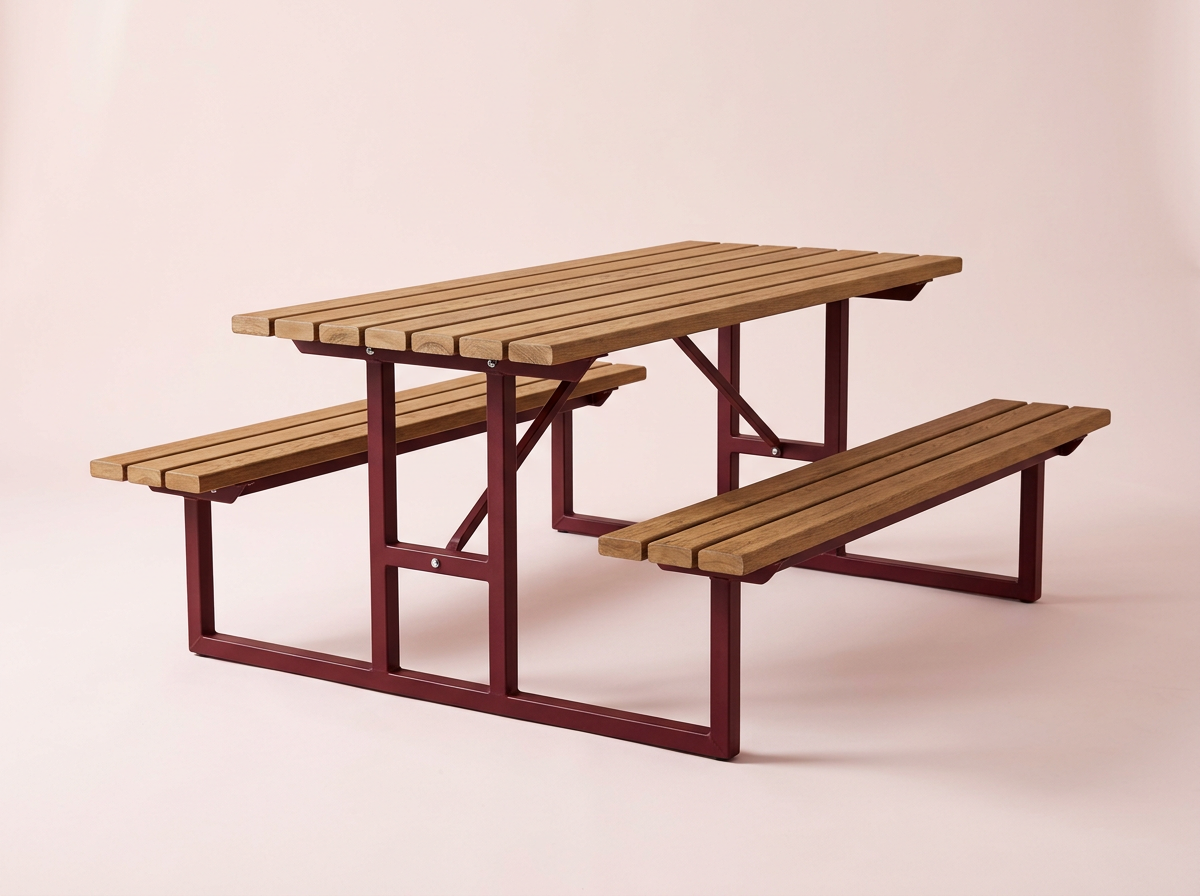
| Outdoor dining area | Lunch and snacks in cooler months | Picnic tables and benches that wipe clean |
| Early years area | Play-based learning for KG children | Low tables and benches, sand and water tables, soft safety surfacing |
Outdoor Furniture That Survives the Sun
Indoor furniture left outside in the UAE fades, warps and cracks quickly. Outdoor furniture needs materials chosen for strong UV, heat and dust.
| Material | Strengths | Watch for |
|---|---|---|
| HDPE or UV-stabilised plastic | Resists sun and moisture, does not rot or rust, easy to clean | Choose light colours; dark plastic gets hot |
| Powder-coated steel or aluminium frames | Strong and long-lasting | Bare metal seats get very hot in sun; use them under shade, with plastic or timber seats |
| Hardwood or treated timber | Natural look, stays cooler than metal | Needs oiling or sealing to stop cracking and fading |
| Concrete or stone seating | Very durable, permanent | Holds heat; only use in deep shade |
| Fabric cushions and mats | Comfort for amphitheatre steps and reading areas | Store indoors when not in use |
- Light colours stay cooler. Pale seats and frames are more comfortable to touch than dark ones.
- Fix or weight heavy pieces so they cannot tip; keep light pieces movable so they can be stored.
- Drainage and dust. Slatted or perforated seats shed dust and dry quickly after cleaning or rare rain.
- Plan storage close to the space for cushions, boards and equipment.
See our outdoor school furniture range, and for inland schools our notes on furniture for Al Ain’s climate.
Safety and Rules
In Dubai, KHDA’s health and safety requirements for private schools cover outdoor areas too: play areas need safe flooring and shade, and equipment and furniture must suit the children’s age group and be inspected and maintained regularly. Furniture must be age-appropriate and free from sharp edges. Schools in other emirates should check the rules of their own authority.
- Choose rounded edges and stable bases, especially for KG areas.
- Check outdoor furniture regularly for cracks, loose fixings and hot surfaces.
- Keep safety surfacing under play and climbing areas.
- Make sure outdoor seating does not block exits or emergency routes.
How to Start
- Find the best shaded space you already have: a covered walkway, courtyard or area under trees.
- Agree how it will be used: one outdoor classroom, a reading garden or a lunch area.
- Add shade where needed, then furniture for one class at a time.
- Timetable it for the cooler months, with an indoor fallback.
- Review after a term and add more spaces or furniture as teachers use it.
The winter break is a good window to install outdoor furniture, ready for the best months of the year; see our school furniture planning calendar.
How We Help
Madrasati makes school furniture in our own factory, so outdoor benches and tables can be made to fit your space and your school colours, and we provide samples on large orders. We deliver and install in all seven emirates. Planning indoor rooms too? See our flexible classroom furniture guide.
Outdoor Learning Questions
Can UAE schools use outdoor learning spaces?
Yes, mainly in the cooler months and always under proper shade. Many schools use courtyards and covered areas for lessons, reading and lunch between late autumn and early spring, within their own heat policy.
What outdoor furniture is best for UAE schools?
UV-stabilised plastic or HDPE seats on powder-coated frames, in light colours and placed in shade. Treated hardwood also works if it is sealed regularly. Avoid dark plastic and bare metal seats in direct sun.
Is outdoor learning good for students?
A 2022 systematic review of 147 studies reported higher engagement, better social skills and some academic gains from learning in natural outdoor settings. The benefits depend on regular use and good teaching.
Do outdoor play areas in Dubai schools need shade?
Yes. KHDA’s health and safety requirements say play areas need safe flooring and shade, and outdoor equipment and furniture must suit the children’s age and be regularly inspected and maintained.
How do we start an outdoor classroom?
Choose your best shaded space, agree how it will be used, add furniture for one class, timetable it for the cooler months and review after a term.
Sources: Mann J. et al., “Getting Out of the Classroom and Into Nature: A Systematic Review of Nature-Specific Outdoor Learning”, Frontiers in Public Health (2022); KHDA health and safety requirements for Dubai private schools, as reported by Khaleej Times; research on outdoor thermal comfort in school grounds (shading and trees). General information only; follow your school’s heat policy and your authority’s rules.
Planning an Outdoor Learning Space?
Send photos and sizes of the space and how you want to use it. We will suggest furniture made for UAE sun.